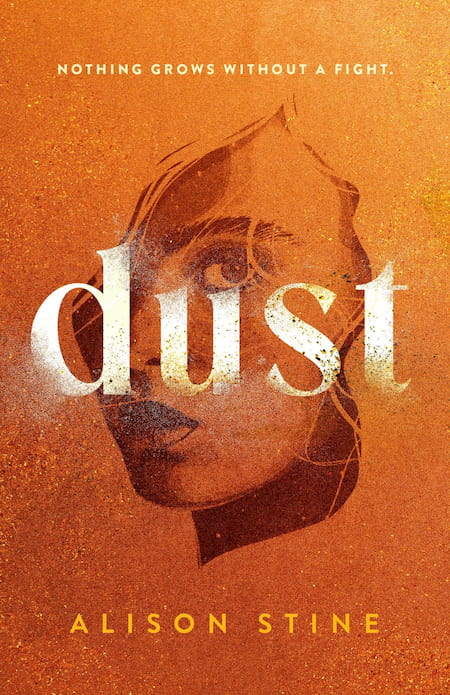
Dust by Alison Stine is a haunting YA speculative fiction that pulled me into its dusty, desperate world from the very first page. As someone who grew up in a tight-knit Asian family where cultural expectations often clashed with personal desires, I deeply resonated with Thea’s struggle to find her voice while navigating complex family dynamics.
The story follows sixteen-year-old Thea, who is hard of hearing in one ear, as her family relocates to a desolate farm in Colorado’s “Bloodless Valley.” Her parents, driven by fear of the modern world, have chosen to isolate their children from society, denying them education and connection under the guise of protecting them. Reading about Thea’s experiences reminded me of my own teenage cousin who recently confided in me about feeling suffocated by family expectations – though thankfully in much less extreme circumstances.
Stine’s atmospheric writing is absolutely phenomenal. I found myself absentmindedly brushing imaginary dust off my clothes while reading! The author masterfully creates a setting that feels both dystopian and disturbingly plausible, where endless dust storms plague the land and isolation becomes its own kind of prison. The environmental elements serve as a perfect metaphor for the suffocating control Thea experiences.
What truly sets this book apart is how Stine incorporates Thea’s hearing impairment into the narrative style itself. There are gaps in conversations, missed words, and moments of confusion that put us directly in Thea’s perspective. Last week, I had lunch with a friend who has partial hearing loss, and reading this book gave me a whole new appreciation for the daily challenges she navigates.
The cast of supporting characters brings warmth to this otherwise bleak landscape. Ray, a deaf boy who introduces Thea to sign language, represents everything her parents fear – and everything she desperately needs. The townspeople who reach out to help despite the family’s resistance reminded me that community can be found in the most unexpected places.
While the romance subplot is sweet and well-developed, it never overshadows Thea’s personal journey of self-discovery and empowerment. I particularly appreciated how Stine balanced the romantic elements with weightier themes of parental control, disability rights, and the importance of education.
The book raises thought-provoking questions about the line between protection and control, and how fear can drive people to make choices that harm the ones they love. Watching Thea’s parents deny her basic educational opportunities and refuse to acknowledge her hearing impairment was genuinely infuriating – I actually had to put the book down several times to calm down!
My one criticism would be that the ending felt slightly rushed and perhaps too neat given the complex issues the story tackles. Without spoiling anything, certain character transformations seemed a bit abrupt and didn’t quite align with their established patterns of behavior.
Beyond being a compelling coming-of-age story, Dust offers important commentary on environmental concerns, disability representation, and the dangers of isolation. I especially appreciated how Stine portrayed the distinction between homeschooling and what Thea’s family practices – complete educational neglect – though I wish this had been explored even more explicitly.
This book will resonate strongly with readers who enjoy character-driven stories that tackle serious issues while maintaining hope at their core. It’s particularly relevant in today’s world where fears about modern society and technology sometimes drive people to extreme positions.
Just be prepared – this isn’t a light read. Some scenes are genuinely difficult to get through, particularly those dealing with parental neglect and isolation. But the moments of connection and growth make the journey worthwhile. I finished this book late last night and found myself lying awake thinking about Thea long after I turned the final page.